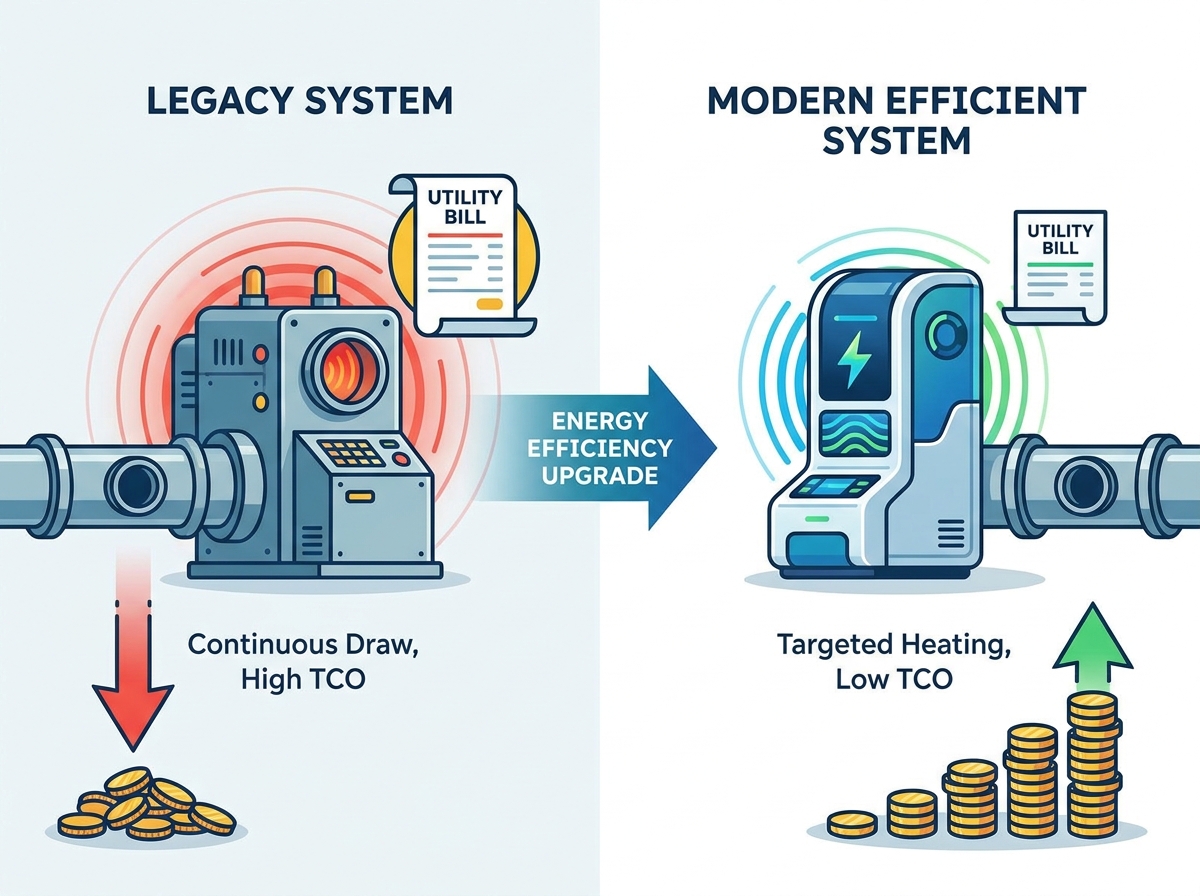
Plastic pipe manufacturing faces a dual threat today. Utility costs keep rising globally. Profit margins continue shrinking across the board. Legacy belling and socketing equipment worsens this harsh reality. These older units rely on outdated heating elements. They draw continuous power even during idle phases. Inefficient pneumatics further compound these hidden operational drains.
Upgrading to modern socketing systems is no longer optional. It represents a strict financial and operational imperative. You cannot treat it merely as a compliance checkbox. Evaluating the right equipment requires a critical eye. You must look past superficial green claims. Focus entirely on measurable electrical efficiency. Assess integration capabilities carefully. Demand technologies offering reduced thermal degradation.
This proactive approach secures long-term profitability. It ensures your facility remains competitive in tight markets. We will explore how modern upgrades eliminate energy waste. You will learn to evaluate suppliers effectively. You will also discover ways to calculate verifiable returns. Let us dive into the mechanics of proper socketing upgrades.
Key Takeaways
Energy-efficient belling machines directly protect operational margins by reducing cost-per-socket.
Advanced heating and servo-driven mechanicals extend equipment lifespan by minimizing thermal stress and mechanical wear.
Accurate ROI calculations require assessing the entire extrusion workflow, avoiding isolated performance metrics.
Selecting an energy saving belling machine supplier requires auditing their specific component choices (e.g., infrared heating, variable frequency drives).
The Hidden Margin Drain in Legacy Socketing Operations
Many facilities still operate outdated socketing systems daily. These machines mask severe financial drains on your business. Traditional ceramic heaters pull maximum power constantly. They stay hot even when no pipe enters the chamber. This continuous energy draw contrasts sharply against actual active socketing time. Active forming often represents just a small fraction of the cycle. The rest of the time simply wastes expensive electricity.
We see a similar story inside utility bills. Standard pipe forming consumes massive amounts of electricity. Heating processes typically account for a huge percentage of this draw. Mechanical movements consume the remaining power. Legacy pneumatics leak compressed air constantly. Compressors run relentlessly to maintain line pressure. This inflates your monthly power invoice drastically. You pay for air leaks instead of pipe production.
Many buyers fall into a common trap. They purchase machines boasting a lower upfront capital expenditure. They believe they saved money on the initial purchase. This "cheap" machine myth unravels quickly during actual operation. A bargain unit severely inflates your operational expenditure over a long lifecycle. The daily power waste vastly exceeds the initial savings. You lose money every single shift. Long-term operational costs skyrocket when you ignore electrical efficiency. It damages your baseline profitability irreparably.
Beyond Power Bills: Efficiency as a Driver of Machine Longevity
Energy efficiency provides benefits well beyond lower electricity bills. It actively extends your machine lifespan. Precise thermal management changes the game entirely. Modern short-wave infrared heating targets specific heating zones. This prevents localized overheating inside the chamber. Less overheating means reduced wear on your plastic pipe belling machine components. Ovens stay cooler on the outside. Internal sensors degrade much slower. The entire unit lasts significantly longer.
Mechanical wear also drops when you optimize power. Optimized power usage correlates directly to better mechanics. Servo-driven actuators replace outdated pneumatic brute force. Servos apply exact pressure for precise, smooth movements. Legacy hydraulics and pneumatics slam components together aggressively. This causes severe mechanical shock over months of use. Efficient servo drives eliminate this violent movement. They protect bearings, joints, and critical seals.
Modern energy-efficient architectures also enable superior predictive maintenance. Digital systems naturally support better sensor integration across the board. You can monitor equipment condition constantly via digital dashboards. The machine alerts you before mechanical parts break. You schedule maintenance during planned downtime windows. This prevents catastrophic, expensive failures mid-shift. Condition-based monitoring keeps production flowing smoothly. It protects your capital investment from premature failure.
5 Evaluation Criteria for an Energy Saving Belling Machine Supplier
Finding the right equipment partner requires strict evaluation. You must audit specific technical criteria before buying anything. A reliable energy saving belling machine supplier provides transparent data.
First, examine the heating technology architecture closely. Demand empirical data on actual heat-up times. Ask for standby power draw metrics. Infrared systems usually outperform ceramic alternatives. They heat up faster and use less idle power.
Second, evaluate the drive systems thoroughly. Look for Variable Frequency Drives (VFDs) in the spec sheet. Insist on modern servo motors. Reject continuous-run AC motors entirely. VFDs only use power when the load demands it.
Third, assess the thermal insulation standards. Oven shielding must feature premium insulation layers. Poor insulation bleeds expensive heat into your factory floor. This forces your facility HVAC to work much harder. It creates a secondary energy drain.
Fourth, analyze the scrap reduction rate carefully. Frame material waste as embedded energy waste. Bad sockets waste plastic and the power used to melt it. Demand data on socketing precision. Review historical defect rates from previous installations.
Finally, require independent verification of all claims. Vague marketing promises hold zero value. Look for documented, third-party testing. Verify official ISO compliance. Ask for standardized energy metrics like kWh per kilogram.
Here are the core areas you must verify during procurement:
Request empirical heating and standby data.
Audit drive system component selections.
Inspect thermal shielding and insulation quality.
Review historical defect and precision metrics.
Verify independent ISO testing and compliance.
Translating Features to Verifiable ROI in an Automatic Belling Machine
Technical features mean nothing without verifiable returns. You must translate technical specs into actual dollars. This process starts by analyzing your automatic belling machine operational metrics.
Begin by running a strict baseline audit. Measure current energy expenditure per one thousand pipes. Use clamp meters on your existing equipment. Record actual consumption during peak production shifts. This establishes your absolute baseline truth. You cannot measure improvement without knowing where you stand today.
Next, model the payback period transparently. Build a skeptical, conservative financial framework. Use your local industrial electricity rates for accuracy. Factor in your multi-shift operations accurately. Compare the baseline against proposed new machine consumption. Calculate how many months until power savings cover the premium price.
You must avoid exaggerated vendor claims carefully. Many suppliers present unrealistic laboratory conditions. They test perfect pipes in climate-controlled rooms. Factory floors experience extreme variations daily. Drafts, material changes, and operator errors happen frequently. Discount ideal vendor claims by at least fifteen percent. This gives you a realistic ROI projection.
Baseline Energy Audit Framework
Audit Phase
Measurement Target
Required Tool
Phase 1
Active Heating Load
Power Analyzer
Phase 2
Idle Power Draw
Clamp Meter
Phase 3
Mechanical Energy
VFD Data Logs
Phase 4
Compressed Air Loss
Ultrasonic Leak Detector
Implementation Risks and Extrusion Line Integration
Upgrading isolated equipment introduces brand new risks. You must manage digital integration carefully. Line synchronization presents immediate production challenges. You might pair an upgraded belling unit alongside older equipment. An upstream energy saving pipe machine must match the belling speed perfectly. If the extruder lags behind, the socketing unit idles. This idling wastes the very power you intended to save. Good PLC handshaking solves this synchronization issue.
Material specificity also dictates thermal requirements heavily. Different plastics behave differently inside industrial ovens. Integrating the machine into a rigid OPVC pipe production line requires precise orientation heating. OPVC demands highly controlled temperature curves to prevent structural failure. Conversely, an HDPE pipe extrusion line demands completely different cooling protocols. You must account for these material differences beforehand.
Operator adoption remains a significant implementation hurdle. Digital controls introduce a steep learning curve for veteran staff. Complex energy-monitoring HMIs often confuse untrained operators initially. Operators might override energy-saving settings manually out of frustration. They often revert to familiar, inefficient manual modes. Supplier-led training is absolutely necessary here. You must secure this onsite training during contract negotiations.
Conclusion
Energy efficiency in post-extrusion processes is critical. It acts as a primary lever for operational cost competitiveness. Wasting continuous power during socketing destroys your profit margins silently. Modern equipment turns this drain into a distinct market advantage. Procurement teams must take immediate action today. Request a detailed power consumption profile from all potential vendors. Do not accept a basic marketing spec sheet. Run a comprehensive operational cost analysis internally. Do this before initiating any final vendor shortlist. Evaluate technical architectures thoroughly. Train your operators properly on the new HMIs. These steps guarantee long-term operational success.
FAQ
Q: How much energy does a modern belling machine actually save compared to a 10-year-old model?
A: Modern systems typically save between 20% and 40% in electrical consumption. Exact savings depend heavily on pipe diameter and wall thickness. Short-wave infrared heating provides the highest efficiency gains. Upgrading drive systems to servos also drastically cuts mechanical power waste.
Q: Does energy efficiency impact the cycle time of the socketing process?
A: It actually improves cycle times. The myth says efficient means slower. This is completely false. Modern efficient heating delivers targeted energy much faster. Infrared elements penetrate the plastic wall instantly. This rapid heating reduces the overall dwell time in the oven.
Q: What should I ask a supplier to prove their energy claims?
A: You must ask for specific metrics. Demand to see the kWh consumed per kilogram of processed material. Request component-level energy ratings for motors and heaters. Ask for reference case studies from active factory environments. Real-world factory data proves true efficiency better than lab tests.