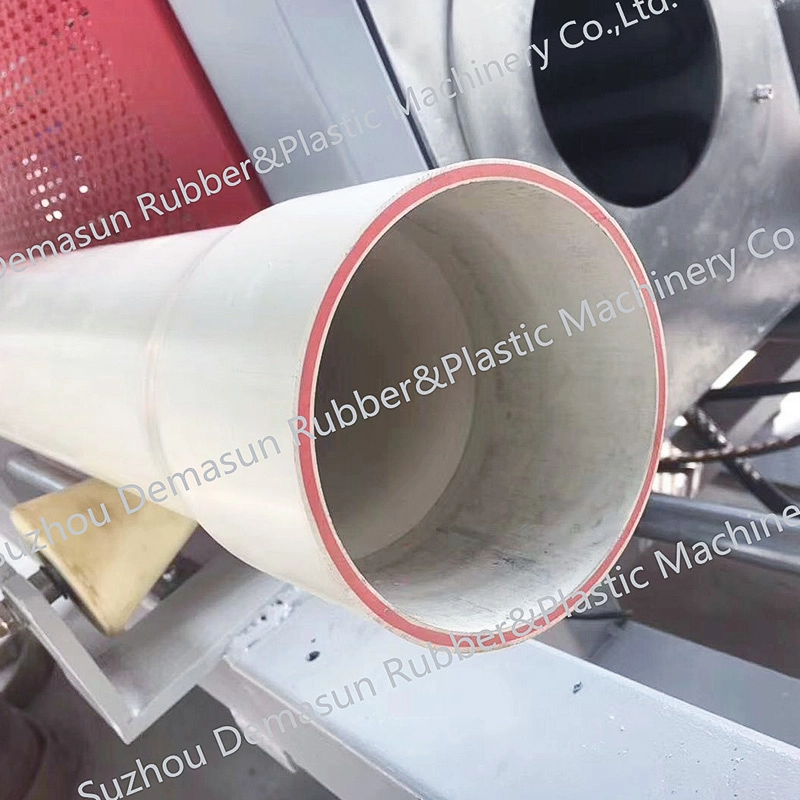
Plastic pipe belling machines create essential socket connections at pipe ends, enabling quick and leak-proof assembly in PVC piping systems. These machines transform plain pipe ends into standardized bells that meet ISO, ASTM, and EN specifications for municipal water, drainage, and industrial applications. Understanding how semi-automatic belling equipment works helps manufacturers select the right solution for their production needs.
How Semi-Automatic Belling Machines Work
Semi-automatic belling machines combine manual pipe handling with automated heating and forming processes. An operator loads the pipe into the machine, initiates the cycle, and the equipment handles the technical phases automatically.
Manual Pipe Loading
The operator positions the pipe in the clamping fixture, ensuring proper alignment with the forming die. Adjustable clamps accommodate various pipe diameters within the machine's specification range. This manual positioning allows visual inspection of each pipe before processing, catching defects before they enter production.
Automatic Infrared Heating
Once loaded, infrared heating elements warm the pipe end to optimal forming temperature. Unlike traditional resistance heating, infrared technology penetrates the PVC material evenly, achieving consistent results without material degradation. The pipe belling equipment monitors temperature automatically, adjusting heating time based on pipe wall thickness and diameter.
Energy-efficient infrared heating reduces power consumption by 30-40% compared to older technologies, translating to lower operating costs over the machine's operational life.
Automatic Socket Forming
At the correct temperature, hydraulic mechanisms move the forming die into position, expanding the softened pipe end into the required socket profile. The machine controls forming pressure and travel distance precisely, ensuring consistent socket geometry across all pipes.
Cooling systems solidify the socket immediately after forming, and the operator removes the finished pipe. A complete cycle typically takes 15-30 seconds depending on pipe size.
Socket Types: R-Type, U-Type, and Square
Different applications require different socket configurations.
R-Type Sockets feature a rounded profile suitable for standard pressure applications in water supply and irrigation systems. This design provides excellent sealing performance with simple gasket installation.
U-Type Sockets offer enhanced structural strength for high-pressure industrial applications. The U-shaped profile distributes stress more evenly at the socket shoulder, handling pressure fluctuations that would compromise standard sockets.
Square Sockets provide maximum load-bearing capacity for buried infrastructure. The squared geometry resists external soil loads and traffic stress, making these sockets essential for drainage systems and culvert applications.
Semi-Automatic vs. Automatic: Choosing the Right Configuration
Semi-automatic machines suit manufacturers with moderate production volumes or those processing diverse pipe specifications. The manual loading step adds labor but provides flexibility that fully automatic systems cannot match.
Key advantages of semi-automatic configuration include:
Lower Investment: Cost 40-60% less than fully automatic alternatives
Flexibility: Easy switching between pipe sizes and socket types
Visual Inspection: Operators catch defects before processing
Simpler Maintenance: Fewer automated components mean easier servicing
Smaller Footprint: Requires less floor space and simpler installation
Applications in Pipe Manufacturing
Semi-automatic belling machines serve diverse industries requiring quality socket production without extreme volume demands. Municipal pipe manufacturers use these machines for water supply and drainage products. Agricultural equipment producers rely on consistent sockets for irrigation systems. Construction suppliers process pipes for structural and electrical applications.
The equipment handles pipe diameters from 20mm to 630mm, covering most commercial and industrial requirements. Changeover between sizes typically takes 15-30 minutes, allowing manufacturers to produce small batches economically.
Maintenance Requirements
Semi-automatic machines require regular maintenance to sustain quality output. Daily checks include heating element inspection, forming die cleanliness, and hydraulic fluid level verification. Monthly maintenance covers lubrication of mechanical components, die alignment verification, and electrical connection inspection.
Forming dies wear over time and require replacement based on production volume. Demasun provides replacement dies and maintenance support for all machine configurations.
FAQ
Q: What pipe diameters can a semi-automatic belling machine process?
A: Standard semi-automatic machines handle pipes from up to 400mm diameter. Heavy-duty configurations extend this range to 630mm for large infrastructure projects.
Q: How long does the belling cycle take?
A: Cycle times range from 15-30 seconds depending on pipe diameter and wall thickness. Larger pipes require longer heating and cooling periods.
Q: Can one machine produce R-Type, U-Type, and Square sockets?
A: No, only R type and U type can be made on one machine.
Q: What power supply do these machines require?
A: Most semi-automatic belling machines operate on 380V three-phase power. Some compact models accept 220V single-phase for lighter specifications.
Conclusion
Semi-automatic plastic pipe belling machines offer an effective balance between capability and investment for manufacturers with moderate production volumes. The combination of manual loading flexibility and automated heating/forming delivers consistent socket quality without the capital requirements of full automation. Understanding your volume needs and socket specifications helps determine whether semi-automatic equipment matches your production requirements.