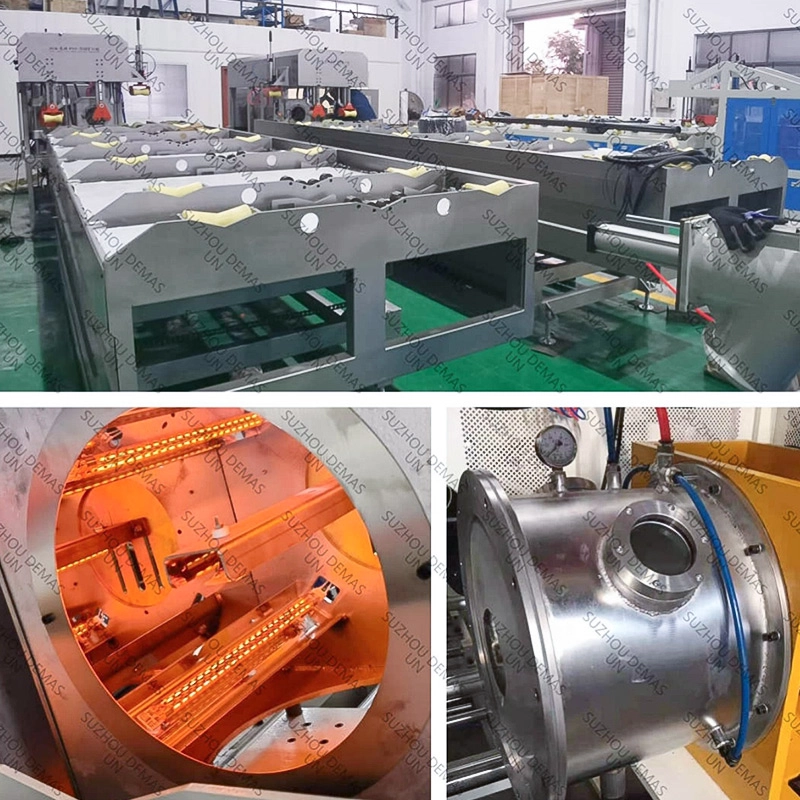
Selecting the correct PVC pipe belling machine requires understanding socket types and their applications. The three main configurations—R-Type, U-Type, and Square—each serve specific purposes across different industries. This guide explains each socket design and helps you match the right equipment to your production needs.
Understanding the Semi-Automatic Belling Process
Semi-automatic PVC pipe belling machines combine manual material handling with automated heating and forming. An operator loads the pipe into the machine, initiates the cycle, and the equipment handles the technical processes automatically. This configuration strikes an effective balance between investment cost and production efficiency.
The semi-automatic approach suits manufacturers processing moderate volumes or those frequently changing between different pipe sizes and socket types. PVC socketing equipment in this category typically costs 20-40% less than fully automatic alternatives while delivering comparable socket quality.
R-Type Sockets: Standard Pressure Applications
R-Type sockets feature a rounded socket profile that provides reliable sealing performance for standard pressure applications. This design has dominated the PVC pipe industry for decades due to its simplicity and effectiveness.
Specifications and Applications
R-Type sockets conform to ISO 4422 and EN 1401 standards for water supply and drainage systems.
Common applications include municipal water distribution, residential plumbing, and agricultural irrigation systems. The rounded profile distributes sealing stress evenly around the gasket, creating dependable leak-proof connections.
U-Type Sockets: High-Pressure Performance
U-Type sockets address applications requiring superior pressure resistance. The U-shaped profile creates additional material at the socket shoulder, where stress concentrations typically occur during high-pressure operation.
When to Choose U-Type
Select U-Type sockets for industrial piping systems, high-rise building plumbing, and applications where pressure fluctuations stress pipe connections. The enhanced geometry handles pressure spikes that would compromise standard R-Type sockets.
The machine must apply precise pressure at multiple points simultaneously to achieve the U-shaped profile without material thinning or wrinkling.
Square Sockets: Maximum Load-Bearing Capacity
Square sockets provide the highest load-bearing capacity among the three configurations. The square profile resists deformation from external loads, making these sockets essential for buried pipe applications where soil pressure and traffic loads affect system integrity.
Industrial and Infrastructure Uses
Drainage systems, culvert pipes, and subway conduits frequently employ square sockets. The squared geometry also simplifies gasket installation, reducing field assembly errors and improving connection reliability.
Manufacturing square sockets demands robust equipment capable of applying significant forming force. The semi-automatic machines handling this profile include reinforced frames and high-capacity hydraulic systems.
Comparing Socket Types
Socket Type
Profile Shape
Typical Applications
Equipment Complexity
R-Type
Rounded
Water supply, irrigation
Moderate
U-Type
U-Shaped
Industrial, high-rise
Moderate
Square
Square
Drainage, infrastructure
High
Semi-Automatic Equipment Selection
When choosing a PVC pipe belling machine for R-Type, U-Type, or Square socket production, verify the equipment covers your diameter range and supports your target socket types. Most semi-automatic machines handle diameters up to 400mm, with heavy-duty models extending to 630mm.
Consider these factors in your evaluation:
Diameter range and socket type compatibility
Heating method (infrared recommended for energy efficiency)
Cycle time and production throughput
Changeover time between socket types
Available power supply and floor space requirements
Maintenance Best Practices
Semi-automatic belling machines require regular maintenance to sustain quality output. Focus on heating element condition, forming die wear, and hydraulic system performance. Replace worn dies promptly—using damaged dies produces out-of-specification sockets that fail in service.
FAQ
Q: Can one semi-automatic machine produce all three socket types?
A: Yes, most semi-automatic machines accept interchangeable forming dies for R-Type, U-Type, and Square sockets. Die replacement takes approximately 20-30 minutes with proper training.
Q: What diameter range do semi-automatic belling machines cover?
A: Standard semi-automatic equipment typically processes pipes up to 400mm diameter. Larger sizes up to 630mm require heavy-duty configurations with enhanced hydraulic capacity.
Q: How does semi-automatic throughput compare to fully automatic?
A: Semi-automatic machines achieve 50-300 pipes per hour depending on pipe diameter, while fully automatic systems reach 300-800 pipes per hour. The difference stems from manual loading requirements.
Q: What heating method do modern belling machines use?
A: Infrared heating has become the industry standard due to its energy efficiency and uniform heat distribution. This technology reduces energy consumption by 30-40% compared to older resistance heating methods.
Q: Which socket type is most common for water supply systems?
A: R-Type sockets dominate municipal water supply applications. Their proven design, simple manufacturing process, and reliable sealing performance make them the preferred choice for standard pressure applications.
Conclusion
Understanding the differences between R-Type, U-Type, and Square sockets guides proper equipment selection for your PVC pipe belling operations. Each profile serves specific applications—from standard water distribution to high-pressure industrial systems. Semi-automatic belling machines offer an accessible entry point for manufacturers seeking quality socket production without full automation investment.