In the plastic manufacturing and recycling industries, the Plastic Grinder plays a critical role in turning large plastic waste or production byproducts into smaller, more manageable pieces for reuse. Choosing the right Plastic Grinder for your facility can significantly enhance production efficiency, reduce costs, and improve sustainability.
This guide will walk you through everything you need to know to choose the perfect Plastic Grinder for your facility in 2026. We will cover the types of grinders, the factors to consider, how to assess your facility's needs, and more. Whether you are working with small-scale recycling or large industrial plastic processing, this comprehensive guide will provide you with the information you need to make an informed decision.
What is a Plastic Grinder?
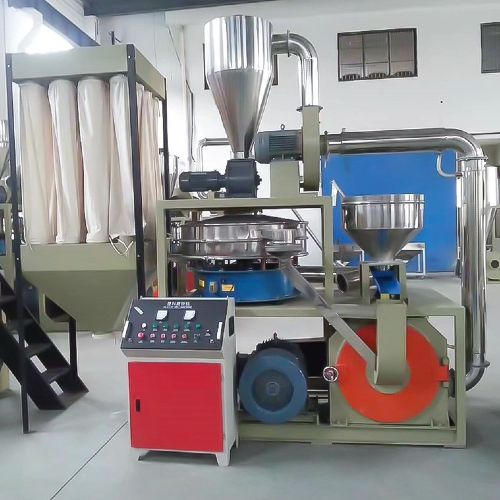
A Plastic Grinder is a machine used to reduce plastic waste into smaller, uniform particles, making it easier to process and recycle. These machines are a key component in plastic recycling lines, ensuring that the material is prepared for further processing, whether it's extrusion, injection molding, or regranulation.
Key Components of a Plastic Grinder:
Blades/Knives: The cutting mechanism that breaks down the plastic into smaller pieces.
Motor: Powers the blades and determines the speed and power of the grinding process.
Infeed Hopper: Where raw plastic material is fed into the grinder.
Screen: A mesh that filters the ground material by size, ensuring uniformity in the final product.
Discharge: The area where the processed material is expelled from the grinder.
The goal of a Plastic Grinder is to efficiently and effectively reduce large plastic pieces to smaller particles for reuse in various industrial processes, enabling companies to save on raw material costs and support recycling efforts.
Types of Plastic Grinders
Choosing the right Plastic Grinder starts with understanding the different types available. Below, we discuss the most common types, their benefits, and their suitability for various applications.
1. Single-Shaft Plastic Grinders
These grinders have one rotating shaft equipped with blades that perform the grinding action. Single-shaft grinders are generally suitable for softer materials like films, foams, and thinner plastics.
Advantages:
Simple design.
Easier to maintain.
Suitable for lower-volume applications.
2. Dual-Shaft Plastic Grinders
Dual-shaft grinders have two opposing shafts that rotate in opposite directions. These grinders are ideal for tougher plastics and larger volumes of material.
Advantages:
Better suited for heavy-duty tasks.
Capable of handling tough materials such as rigid plastics.
More efficient at reducing large quantities of material.
3. Granulators
Granulators are designed to handle larger volumes of plastic, particularly in manufacturing environments where bulk materials need to be reduced. Granulators can break down materials into granular form, making them ideal for recycling operations.
Advantages:
High throughput.
Effective at reducing large and bulky plastic products.
Ideal for mass processing.
4. Crushers
Plastic crushers are designed for the initial reduction of large plastic objects, such as plastic bottles or containers. They use a combination of shear and compressive forces to break down large materials into smaller fragments.
Advantages:
High efficiency for initial reduction.
Suitable for tough, dense plastic materials.
Factors to Consider When Choosing a Plastic Grinder
Selecting the right Plastic Grinder for your facility depends on a variety of factors, each influencing your machine's efficiency, performance, and cost-effectiveness.
1. Material Type and Size
Different plastics require different grinding processes. The Plastic Grinder you choose must be compatible with the material you are processing. Consider the following factors:
Plastic Types: Are you working with PET, PVC, HDPE, or mixed plastics? Different plastics require different cutting methods and blade configurations.
Material Size: Consider whether you are working with small plastic parts or large bulky materials. Larger objects may require a more powerful grinder.
2. Throughput Requirements
Throughput refers to the amount of material processed by the grinder in a given time. If your facility has high production demands, choosing a grinder with a high throughput capacity will ensure continuous operations without bottlenecks.
Consider the expected material volume per hour and the necessary speed of grinding to meet your production goals.
3. Power and Efficiency
Power consumption is an important consideration, especially in large-scale operations. Plastic Grinders vary in power requirements, and the machine's motor should be chosen based on the volume of material being processed.
For smaller, low-volume operations, a grinder with a lower horsepower may suffice.
For larger, heavy-duty operations, a high-powered grinder will be necessary.
Energy efficiency is also a critical factor, especially for facilities aiming to reduce operational costs and their environmental footprint.
4. Cutting Mechanism
The cutting mechanism of a Plastic Grinder determines its efficiency in reducing plastic waste. There are two common cutting mechanisms:
Rotary Cutting: Where the blades rotate to cut the plastic.
Static Cutting: Where the blades are fixed, and the plastic is forced through a stationary cutter.
The choice depends on the material and how fine the desired output needs to be. For more precise cuts, a rotary cutting mechanism may be better suited.
5. Durability and Maintenance Needs
A Plastic Grinder should be durable enough to withstand long-term usage without requiring excessive maintenance. Consider the materials used in the construction of the machine and its components.
Blades and Knives: Are they made of high-quality, wear-resistant steel?
Frames: Are the frames sturdy and capable of supporting high workloads?
Choosing a machine that is easy to maintain and clean can reduce downtime and maintenance costs in the long run.
How to Assess Your Facility's Needs
Before purchasing a Plastic Grinder, you must assess your facility’s specific needs. The ideal grinder depends on factors such as the material you process, your throughput requirements, and your space limitations.
Capacity Requirements
Calculate the capacity required by your facility. A high-volume production line will need a grinder that can handle large amounts of material continuously, while smaller operations may only need a grinder with moderate throughput.
Space Considerations
Make sure the Plastic Grinder you choose fits within your available workspace. Measure the space available for the grinder, taking into account any associated equipment or additional machinery required for your operation.
Key Features to Look for in a Plastic Grinder
When evaluating Plastic Grinders, certain features can enhance performance, safety, and ease of use.
Safety Features
Safety should always be a top priority in any industrial setting. Look for grinders equipped with safety features such as:
Emergency stop buttons.
Automatic shutoff in case of overheating.
Safety guards to protect users from rotating parts.
Ease of Use
An easy-to-operate Plastic Grinder can significantly reduce the time spent on training operators and improve overall productivity. Look for grinders with:
Simple control panels.
Clear user manuals and training materials.
Automated features to reduce manual intervention.
Adaptability
Choose a grinder that can be easily adjusted for different types of plastics or production changes. Machines with adjustable cutting speed, blade configurations, and screen sizes offer the flexibility to adapt to future needs.
Noise and Vibration Control
Excessive noise and vibration can be disruptive and reduce the comfort and safety of workers. Look for grinders with noise and vibration-reducing features such as:
Anti-vibration pads.
Low-noise motors.
Choosing the Right Supplier and Support
Choosing the right supplier is as important as selecting the correct grinder. Look for suppliers that offer:
Warranty and Service Contracts: Ensure that the machine comes with a warranty that covers parts and labor. A service contract can help with regular maintenance and repairs.
Spare Parts Availability: Check that the supplier can quickly provide replacement parts in case of failure.
Customer Support: Choose a supplier that offers reliable, responsive customer service for troubleshooting and advice.
Budget Considerations
The cost of a Plastic Grinder can vary greatly depending on features, capacity, and brand. It is essential to balance your budget with your requirements.
Consider the following when setting a budget:
Consideration | Low-Budget Option | High-Budget Option |
Initial Investment | Affordable models with basic features | Advanced models with high throughput |
Operating Costs | Lower power consumption, simpler features | Higher energy efficiency, but advanced features |
Maintenance Costs | Minimal maintenance, fewer parts | Comprehensive service, frequent part replacement |
Long-Term Cost | Best for small operations with lower volume | Ideal for large-scale, heavy-duty operations |
Conclusion
Choosing the right Plastic Grinder for your facility is a vital decision that directly impacts both efficiency and sustainability. By carefully considering factors like material type, throughput, power requirements, cutting mechanisms, and your budget, we can help you ensure that you select the optimal grinder tailored to your needs. Additionally, it's important to assess your facility's space and capacity requirements.
At Suzhou Demasun Rubber & Plastic Machinery Co., Ltd., we specialize in offering high-quality plastic grinding solutions designed to enhance your production process. Our expertise and advanced machinery are built to improve efficiency, reduce plastic waste, and lower overall operating costs.
We understand that selecting the right equipment is crucial for your success. That’s why we’re here to guide you through the process and provide the support you need to make an informed decision. Whether you’re looking to optimize existing operations or expand your facility, we offer the right Plastic Grinder to meet your requirements. Don’t hesitate to contact us today for personalized advice and solutions tailored to your specific needs.
FAQ
1. What is the difference between a single-shaft and dual-shaft plastic grinder?
Single-shaft grinders have one rotating blade for lighter materials, while dual-shaft grinders feature two opposing blades, making them better suited for tougher, denser materials.
2. How do I calculate the throughput requirements for my facility?
Throughput is calculated by measuring the total volume of material to be processed per hour. This depends on the material type and how much waste or production byproduct your facility generates.
3. Can a plastic grinder handle multiple types of plastics?
Yes, depending on the configuration, many Plastic Grinders are adaptable and can process a wide variety of plastics, though some may be better suited for specific materials like PET or HDPE.
4. What maintenance is required for a plastic grinder?
Regular maintenance includes sharpening or replacing blades, cleaning the machine, lubricating moving parts, and checking for wear and tear on the motor and frame.
5. How do I choose the right power rating for my plastic grinder?
The power rating should be selected based on the volume of material you need to process. Higher volumes and tougher plastics require more powerful motors.


