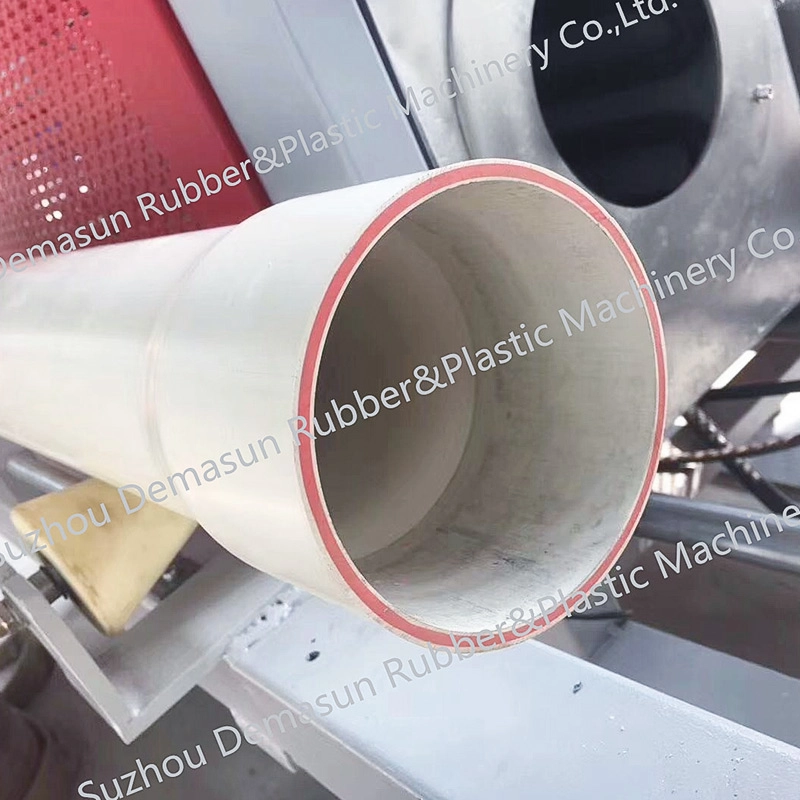
Industrial PVC pipe manufacturing demands equipment that balances technical sophistication with operational reliability. An automatic plastic pipe belling machine delivers consistent socket quality across extended production runs while minimizing operator intervention. Understanding the key features, technical specifications, and maintenance requirements helps you maximize equipment performance and return on investment.
Core Features of Modern Automatic Belling Machines
Today's automatic pipe belling equipment incorporates advanced technology to achieve precision and efficiency. These features distinguish high-performance machines from basic alternatives.
Infrared Heating Technology
Infrared heating elements provide the most efficient method for pipe end preparation. Short-wave infrared radiators penetrate PVC material uniformly, achieving optimal forming temperature faster than conventional methods. The automatic plastic pipe belling equipment monitors heating with precision temperature sensors, adjusting power delivery to maintain consistent results regardless of ambient conditions or pipe batch variations.
Automatic Loading and Unloading
Integrated material handling systems feed pipes into the belling station and discharge finished products without manual intervention. Conveyor systems, servo-driven grippers, and sensor arrays coordinate smooth material flow. This automation reduces labor requirements and eliminates positioning errors that affect socket quality.
Technical Parameters
Power Requirements
Most industrial automatic belling machines require 380V three-phase power at 50-60Hz. Total power consumption ranges from 15kW to 40kW depending on heating capacity and auxiliary systems. Verify electrical supply capacity before installation to avoid operational constraints.
Space Requirements
Equipment footprint typically ranges from single-oven plastic pipe belling machine to high efficient dual-oven. Consider material flow patterns and operator access when planning installation. Adequate clearance around the machine simplifies maintenance and improves safety.
Preventive Maintenance Schedule
Consistent maintenance prevents unexpected downtime and extends equipment lifespan. Establish a maintenance routine following these guidelines.
Daily Checks (5-10 minutes)
Inspect heating elements for damage or contamination
Verify forming die alignment and cleanliness
Check hydraulic fluid level
Confirm sensor operation
Clean work area and material transport system
Weekly Maintenance (30-45 minutes)
Lubricate linear guides and bearing assemblies
Inspect conveyor belt tension and wear
Verify cooling system operation
Check electrical connections for security
Review production logs for quality trends
Monthly Service (2-3 hours)
Replace hydraulic filters
Calibrate temperature sensors
Inspect and adjust forming die clearance
Check structural integrity of frame and supports
Update controller firmware if available
Annual Overhaul (8-12 hours)
Comprehensive annual service includes complete hydraulic system flush, electrical system inspection by qualified personnel, structural weld inspection, and replacement of wear components including heating elements, seals, and bearings.
Inconsistent Socket Dimensions: Check heating temperature uniformity, forming die wear, and material batch consistency. Temperature sensor calibration often resolves dimensional variation.
Excessive Cycle Time: Verify hydraulic pressure, check for air in the system, and inspect heating element output. Component aging sometimes reduces system performance gradually.
High Reject Rate: Examine material temperature at forming, verify die geometry, and review operator procedures. Many quality problems stem from inadequate training rather than equipment malfunction.
Spare Parts and Support
Maintain an inventory of critical spare parts including heating elements, seals, temperature sensors, and forming dies. Demasun provides comprehensive technical support including remote diagnostics, installation assistance, and operator training programs.
FAQ
Q: What is the expected lifespan of an automatic belling machine?
A: With proper maintenance, industrial belling machines operate reliably for 10-15 years. Critical components may require replacement during this period, but the core machine structure typically outlasts multiple generations of product specifications.
Q: How often should forming dies be replaced?
A: Die replacement frequency depends on production volume and pipe materials. Inspect dies monthly for wear patterns and replace when dimensions approach tolerance limits.
Q: What training is required for operators?
A: Basic operation training requires 8-16 hours. Maintenance technician training for advanced troubleshooting and adjustment typically requires 3-5 days. Demasun includes operator training with equipment purchase.
Q: Can the machine handle different pipe materials?
A: Standard machines process PVC and UPVC pipes. Processing CPVC, PE, or PP materials requires equipment modifications including adjusted heating parameters and different forming dies.
Q: What warranty coverage do manufacturers typically provide?
A: Standard warranty periods is 12 months.
Conclusion
Automatic plastic expansion machines are a reasonable and relatively low investment,their contribution to production efficiency and quality consistency delivers substantial returns. Understanding technical parameters, establishing rigorous maintenance routines, and partnering with responsive support providers ensures your equipment operates at peak performance throughout its operational life.